8 min read
Journal · Wildlife & Nature
Understanding Cat Body Language: Decoding Tail Wags, Purrs, and Slow Blinks
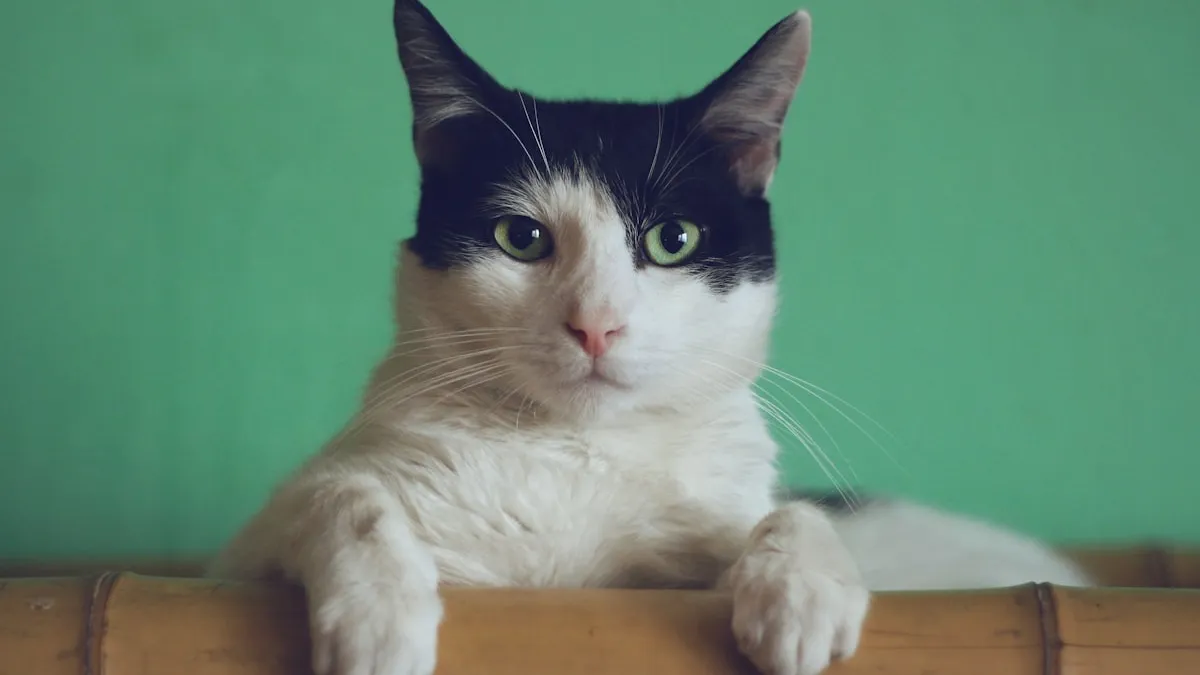
From the predatory calculus of a twitching tail to the hidden frequency of the 'solicitation purr,' a science-backed guide to decoding the subtle signals your cat is sending.
By Kuber
Few domestic creatures are as persistently misunderstood as the common house cat. Where dogs wear their hearts on their collars, broadcasting every emotional shift with frenetic tail wags, open-mouthed grins, and full-body wriggles, cats communicate in a dialect of micro-movements, millimeter shifts in ear posture, and acoustic nuances that are easy to misread.
The root of this disconnect lies in evolutionary history. Dogs evolved from wolves, cooperative pack hunters whose survival depended upon clear, unambiguous social signals. Domestic cats (Felis catus), by contrast, descend from the solitary African wildcat (Felis lybica). In a solitary hunter’s world, telegraphing your internal state or showing physical vulnerability invites territorial rivals and larger predators. The domestic cat never evolved an exuberant signaling apparatus; instead, it refined a quiet, exquisite vocabulary.
Once you know what to look for, a cat is never truly inscrutable. Deciphering their body language transforms your relationship with your pet from a guessing game into a genuine, reciprocal conversation.
1. The Ocular Dialogue: The Slow Blink and Pupil Dynamics
Human beings rely heavily on direct, sustained eye contact to show engagement and sincerity. In the feline world, however, an unblinking, wide-eyed stare is an overt declaration of dominance or predatory threat. If you hold a fixed stare with a cat across the room, you are not establishing rapport; you are issuing a challenge.
The true currency of feline affection is the slow blink.
In a landmark 2020 study published in the peer-reviewed journal Scientific Reports, cognitive researchers Dr. Tasmin Humphrey and Professor Karen McComb at the University of Sussex provided the first rigorous empirical evidence of the slow blink’s communicative power. The researchers demonstrated that cats are significantly more likely to return a slow blink, a series of half-blinks followed by prolonged narrowing or gentle closing of the eyelids, when their human initiates one. Furthermore, in controlled trials with unfamiliar people, cats were far more willing to approach an outstretched hand after the human delivered a slow blink than when they maintained a neutral, open-eyed expression.
To perform a slow blink correctly:
- Catch your cat’s eye gently from a comfortable distance.
- Soften your facial muscles and slowly narrow your eyes to a gentle close for two to three seconds.
- Reopen them slowly or look slightly away.
If your cat responds by narrowing their eyes or closing them lazily, they are paying you the highest feline compliment: I trust you enough to surrender my visual vigilance in your presence.
Beyond the eyelids, pay close attention to pupil diameter. A cat’s pupils expand and contract in response to ambient light, but rapid changes in ambient conditions are also governed by autonomic nervous system arousal:
- Narrow slits in moderate lighting: Suggest confidence, contentment, or calm assertiveness.
- Saucer-wide dilated pupils (mydriasis): Signal intense emotional stimulation. If their body is loose and playful, they are dialed in on a toy; if their body is tense, low, or ears are pulled back, dilated pupils indicate acute terror or defensive aggression.
2. The Acoustic Complexity of the Purr: Not Just Contentment
For decades, conventional pet folklore held that purring was the feline equivalent of a smile, a pure reflex of bovine contentment. Veterinary behaviorists now know that purring is far more versatile and emotionally complex. Cats purr when they are happy on your lap, but they also purr when in labor, severely injured, recovering from surgery, or terrified at the veterinary clinic.
Purring is a low-frequency sonic mechanism produced by rapid intermittent signaling from the laryngeal muscles (at approximately 25 to 150 vibrations per second). Ethologists categorize purrs into three distinct functional modes:
The Contentment Purr
A steady, rhythmic vibration without harsh vocal spikes, occurring during grooming, nursing, or resting beside a trusted human companion. It releases endorphins, lowering heart rate and promoting physiological calm.
The “Solicitation Purr”
In another breakthrough study led by Dr. Karen McComb and published in Current Biology, researchers recorded domestic cats seeking food in the morning. Acoustic analysis revealed that cats subtly embed an abrasive, high-frequency cry (between 300 and 600 Hz) inside the soothing low-frequency purr. Crucially, this embedded sound mirrors the auditory acoustic profile of a human infant’s distress cry. Even people who had never owned cats rated this solicitation purr as significantly more urgent, demanding, and impossible to ignore. It is a learned, highly sophisticated adaptation tailored specifically for interspecies domestic manipulation.
The Self-Healing Purr
Vibrations in the 20 to 140 Hz frequency range have well-documented clinical benefits: they improve bone density, ease muscular tension, and stimulate tissue regeneration. When an injured or frightened cat purrs, they are engaging an internal palliative mechanism: self-soothing through mechanical bioresonance.
3. The Tail: The Barometer of Feline Emotion
If the face reflects a cat’s immediate focus, the tail reflects their underlying emotional trajectory. Unlike dogs, whose tail wags almost universally reflect arousal or social friendliness, a cat’s tail operates under a completely different set of rules.
       [Upright + Hook]              [Horizontal / Low]             [Whipping / Thumping]
       Friendly Greeting             Neutral Navigation             Sensory Overstimulation
              /                              |                                \
        Confidence & Trust             Cautious Calm                 Imminent Strike Warning
The Upright “Question Mark”
A tail carried vertically with a soft, forward-facing curve at the tip is the universal greeting posture of domestic felines. Observed frequently among bonded littermates, it announces: “I come in peace, and I am receptive to contact.” When a cat walks toward you with their tail held high and a slight quiver at the base, they are at their most confident and welcoming.
The Low Horizontal or Tucked Tail
A tail carried level with the spine indicates neutral exploration. If the tail drops below the backline or tucks tightly beneath the rear quarters, the cat is feeling apprehensive, uncertain, or submissive.
The Slow Swish vs. The Rapid Whip
- A gentle, undulating sway at the very tip: Signifies mild curiosity or concentrated mental calculation (often seen right before pouncing on a toy).
- A rhythmic, heavy thumping against the floor or couch: Signifies sensory overload or rising frustration. Unlike a dog’s wag, this is a clear warning sign. It means: You are crossing my threshold. Stop petting me, or I will bite.
The “Bottle Brush” (Piloerection)
When a cat arches their back and puffs their tail to twice its natural circumference, the sympathetic nervous system has triggered an involuntary goosebump reflex in the hair follicles. It is an instinctual bluff designed to make the cat appear physically larger in the face of an existential threat.
4. Ears and Whiskers: The Subconscious Radar
A cat’s ears are controlled by 32 individual muscles each, allowing them to rotate 180 degrees independently of one another. They are not merely auditory dishes; they are mood indicators:
- Forward and Relaxed: The default state of a calm, curious cat.
- Twitching or Pivoting Rapidly: Tracking simultaneous environmental sounds, usually signaling heightened alert or mild uncertainty.
- “Airplane Ears” (Flattened Horizontally): When the ears swivel outward like airplane wings, the cat is signaling frustration, anxiety, or internal conflict. They are unhappy with the current situation and seeking distance.
- Pinned Flat Against the Skull: Defensive aggression. Flattening protects the delicate pinnae from claws and teeth during an anticipated physical altercation. Back away immediately.
Whiskers (vibrissae) provide a companion signal:
- Fanned slightly forward: Engaged, curious, and seeking sensory tactile data.
- Pulled back flat against the muzzle: Fearful, defensive, or preparing for an aggressive snap.
5. The “Belly Trap”: Why Rubbing the Tummy Goes Wrong
One of the most frequent misunderstandings between cats and humans centers on the exposed belly.
A cat walks into the room, stretches languidly, rolls onto their side or back, and exposes their soft underside. An owner, conditioned by years of dog interactions, reaches down for an enthusiastic tummy rub, and is immediately met with a four-paw trap of claws and teeth.
Here is what actually happened: When a cat exposes their abdomen, they are demonstrating absolute spatial comfort and emotional trust. The ventral abdomen houses their most vulnerable internal organs. By lying belly-up, they are telling you: “I feel completely safe in this room with you.”
It is an exhibition of trust, not an invitation to touch.
Feline hair follicles on the belly are hypersensitive to friction. Within two to three strokes, the sensation transitions from pleasant contact to acute sensory irritation. Compounding this, the primal instinct of an animal caught on its back when touched is to grab the predator with its forepaws and disembowel with the rear claws.
When your cat shows you their belly, the proper etiquette is to acknowledge the compliment verbally, or to offer a gentle scratch around their cheeks, chin, or the base of their ears. Leave the stomach strictly alone.
6. How to Build Better Feline Communication
Applying this understanding in everyday life requires minor adjustments to human habits:
- Offer the “Index Finger Handshake”: When meeting a new or aloof cat, do not loom overhead or reach for the top of their head. Extend a single index finger at cat-nose level, roughly six inches away. Allow the cat to approach, inspect, and rub their scent glands against your finger. This lets them control the initiation of contact.
- Respect the Temporal Scent Glands: Cats love being scratched around the cheeks, chin, and between the ears because these zones house sebaceous glands that deposit facial pheromones. Rubbing these areas reinforces their scent profile on you, confirming you as family.
- Observe Petting Thresholds: Watch for subtle warning signs during cuddle sessions: a twitching tail tip, ears drifting sideways, skin rippling along the spine, or sudden, rapid grooming of a paw. These are non-verbal requests for personal space. Pausing before the cat reaches sensory overload prevents petting-induced bites.
By respecting their subtle signals, you replace human assumptions with genuine feline literacy and build a companionship rooted in mutual confidence and trust.